Tucson is Arizona's second largest city, home to an estimated 548,371 people as of July 2025, according to
U.S. Census Bureau QuickFacts. Just over half of Tucson housing units are owner-occupied, the median owner-occupied home is valued at $266,200, and more than 16 percent of residents are 65 or older. That is a very different homeowner profile from the fast-growing Phoenix suburbs: older homes, more retirees, more paid-off mortgages, and a lot of houses tucked up against the Catalina, Rincon, and Tucson Mountains.
Those differences shape what home insurance in Tucson, AZ costs and what a policy actually needs to cover. Here is what Old Pueblo homeowners should know before they buy a first policy or renew the one they have.
Why Tucson homeowners need the right home insurance
Tucson's housing stock is older than most of the Valley. Midtown bungalows, Sam Hughes brick homes, ranch houses on the east side, and 1970s and 1980s subdivisions in Oro Valley and Marana all come with roofs, plumbing, and electrical systems that carriers look at closely. A 1955 home with original galvanized pipes or a 1985 home with a 20-year-old shingle roof will price higher and can be harder to place than a newer build, and some carriers will not write it at all without updates.
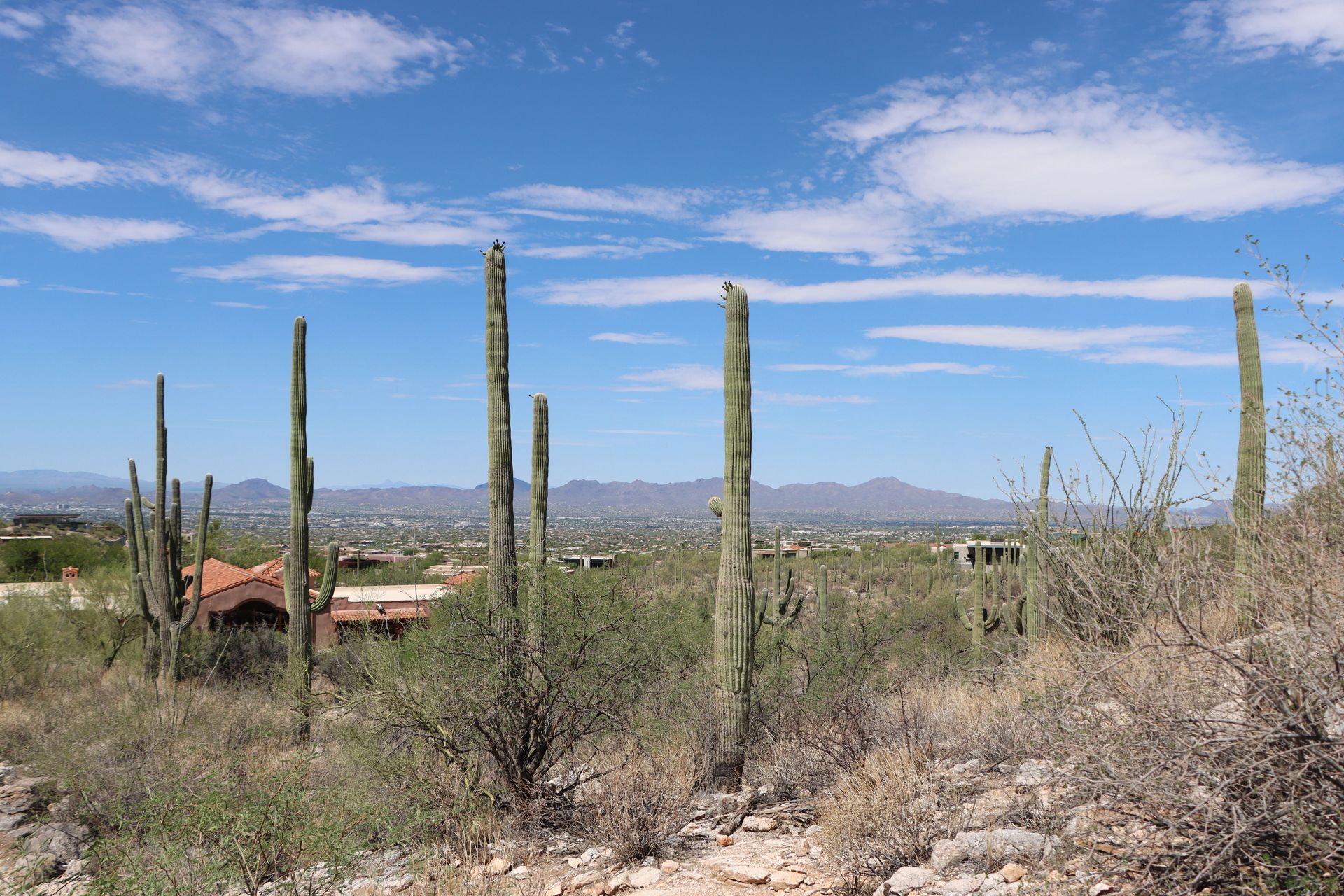
Location matters just as much. Homes in the Catalina Foothills, Sabino Canyon, and the Tucson Mountains sit in the wildland-urban interface, where desert brush and mountain terrain meet neighborhoods. The 2020 Bighorn Fire burned across the Santa Catalina Mountains, and the
Pima County Regional Flood Control District warns that the burn scar raised flash flood and debris flow risk for homes downstream along washes like Finger Rock, Sabino Creek, and the Canada del Oro for years after the fire.
Arizona does not require homeowners insurance by state law, but every mortgage lender does, and a lender's minimum is written to protect the loan balance rather than your equity or belongings. The
Arizona Department of Insurance and Financial Institutions encourages homeowners to review their own limits, deductibles, and exclusions instead of assuming the lender's requirement is enough. With Tucson's many paid-off homes, a lot of owners have no lender pushing them at all, which makes it even easier to end up underinsured.
How an independent broker helps Tucson families shop coverage
Riseson Insurance is an independent Arizona broker, which means we are not tied to one carrier. When a Tucson homeowner asks us for a quote, we run the same house through multiple top-rated companies and show you the results side by side. That matters in Tucson more than in a new-build suburb because carriers treat older homes and foothills ZIP codes very differently. One company may load the rate for a 1960s roof or for distance from a fire station while another treats the same home as a standard risk.
Bundling is the second lever. Most Tucson households insure at least one vehicle, and pairing the home policy with the auto policy usually unlocks a multi-policy discount on both. We walk through the numbers in our guide to
how much you save bundling home and auto insurance in Arizona. For a Tucson retiree with a paid-off house and two cars, the bundle is often the largest single discount on the account.
What home insurance costs in Tucson, AZ
Tucson homeowners pay an average of $2,168 per year for a policy with $300,000 in dwelling coverage, $100,000 in liability, and a $1,000 deductible, according to
Insure.com, which last updated its Tucson data in May 2025. That works out to about $181 per month and is $347 less than the national average of $2,515 in the same study. For a smaller home insured at $200,000, the Tucson average drops to $1,677 per year.
The spread between carriers is the number worth paying attention to. In the same Insure.com data, the lowest-priced major carrier in Tucson averaged $1,390 per year while others averaged more than $2,800 for the same coverage. That is a gap of roughly $1,400 a year on an identical house, which is exactly why we quote every Tucson home with several companies instead of one.
Your own rate will depend on the age and material of your roof, the age of your plumbing and wiring, whether you have a pool, your claims history, your credit-based insurance score, and the deductible you choose. Newer homes in Rita Ranch, Vail, and Marana with tile roofs and no claims often land below the Tucson average. Older midtown and foothills homes can price well above it until the roof or plumbing is updated.
Arizona requirements and Tucson's local risks
Tucson has three local risks that a standard HO-3 policy treats differently, and every homeowner should know where they stand on each.
Wildfire in the foothills. Fire is a covered peril on a standard policy, but carriers use wildfire risk scores to decide whether to write a foothills home at all and what to charge. Defensible space, a Class A roof, and ember-resistant vents can change both the answer and the price. Our guide to
how insurance companies determine wildfire risk in Arizona explains what underwriters look for.
Monsoon wind, hail, and flash flooding. Wind and hail are covered, but many Arizona carriers now apply a separate wind and hail deductible that is higher than your regular deductible, so read that line before you sign. Flood is a different story. Water that rises from a wash, a street, or a burn-scar debris flow is excluded from every standard homeowners policy. A separate flood policy through the National Flood Insurance Program or a private carrier is the only way to cover it. Nearly one-third of NFIP flood claims between 2014 and 2024 came from outside high-risk flood areas, according to
FloodSmart.gov, and Pima County's own flood district urges homeowners near washes to ask about a low-cost preferred risk policy. Our guide to
preparing for monsoon season covers what to check before July.
Heat, age, and slow leaks. Tucson summers shorten the life of AC compressors, water heaters, and roofing, and older plumbing fails quietly behind walls. Sudden water damage from a burst pipe is covered, but gradual leaks, wear, and mechanical breakdown are not. An equipment breakdown endorsement and a water leak sensor are inexpensive ways to close part of that gap on an older Tucson home.
Beyond the basics: complete protection for a Tucson home
Once the standard policy is set, a few add-ons close the gaps that matter most in Pima County. Extended or guaranteed replacement cost adds a cushion above your dwelling limit so a spike in construction costs after a regional storm or fire does not leave you short. That matters in Tucson, where the market value of an older home is often lower than what it would cost to rebuild it with today's labor and materials. We explain the difference in our guide to
replacement cost insurance for home and auto.
Water backup coverage pays for damage when a sewer or drain backs up into the home, a separate risk from flood that is excluded unless you add it. Scheduled personal property covers jewelry, firearms, and collectibles above the small sublimits in a base policy. And if you own a pool, host a lot of visiting family in winter, or have built real equity in a paid-off home, higher personal liability limits or a separate
umbrella policy protect what you have worked for.
Frequently asked questions about home insurance in Tucson, AZ
How much does home insurance cost in Tucson, AZ?
Tucson homeowners pay an average of $2,168 per year for $300,000 in dwelling coverage, or about $181 per month, according to Insure.com data updated in May 2025. That is below the national average of $2,515. Newer homes with tile roofs and no claims often land under that figure, while older roofs, older plumbing, pools, and foothills locations push rates up. Quotes from several carriers are the only way to know your real number.
Does Arizona law require homeowners insurance in Tucson?
No. Arizona has no state law requiring homeowners insurance, but every mortgage lender requires it as a condition of the loan. If your Tucson home is paid off, nobody requires coverage at all, which is why many long-time owners carry limits that have not been reviewed in years.
Does my Tucson home insurance cover flooding from a wash or the Bighorn Fire burn scar?
No. Flood damage from surface water, washes, and post-fire debris flows is excluded from every standard homeowners policy. You need a separate flood policy through the NFIP or a private carrier. Pima County's flood control district recommends that homeowners downstream of the Catalina burn area buy flood insurance before monsoon season, and FloodSmart.gov reports that nearly one-third of NFIP claims from 2014 to 2024 came from outside high-risk zones.
Is it harder to insure an older home in Tucson?
It can be. Carriers look closely at the age of the roof, plumbing, electrical panel, and water heater on homes built before 1990, and some will decline or surcharge until those systems are updated. An independent broker can match an older midtown or foothills home to the carriers that still write it at a fair price, and can tell you which single update, usually the roof, does the most to lower your premium.
How much can I save by bundling home and auto insurance in Tucson?
Multi-policy discounts vary by carrier, but bundling home and auto is typically the largest single discount available on an Arizona home policy. For a Tucson household with a home and two vehicles, the combined savings across both policies usually outweigh any other credit. An independent broker can show you the bundled and unbundled price from several carriers at once.
Get your Tucson home insurance quote today
If you live in Tucson and have not compared home insurance quotes in the last year, you are likely overpaying or underinsured. Riseson Insurance is an independent Arizona broker, which means we work for you, not for one carrier. We will pull quotes from multiple top-rated companies, walk you through what is actually covered, including the wildfire, flood, and older-home gaps that matter in Pima County, and find the bundling angle that saves the most. Reach out for a free Tucson home insurance quote and see your options in one place.