Business Owner's Policy (BOP) in Arizona: What It Covers and When You Need One
A Business Owner's Policy (BOP) is the most common entry-level commercial insurance package for Arizona small businesses. It bundles three coverages that most businesses with a physical location need anyway: general liability, commercial property, and business interruption. Buying them together under one policy typically costs less than purchasing each one separately.
But a BOP is more than a convenience bundle. The more important point is what it closes. General liability protects you from third-party claims. Your landlord's building policy protects the structure. Neither one protects your business's own property, your equipment, your inventory, or your income if you're forced to shut down temporarily. A BOP fills that gap.
The median monthly cost of a BOP for Arizona small businesses is approximately $47, compared to $31 for general liability alone, according to industry data. For roughly $16 more per month, most businesses gain commercial property protection and business interruption coverage. That math is hard to argue with.
What a BOP Includes
A standard BOP combines three core coverages into one policy. Here is what each one does:
General Liability
General liability insurance responds when a third party claims your business caused them harm. That includes a customer slipping and falling in your store, damage your employee accidentally causes to a client's property, and personal or advertising injury claims like defamation.
Most commercial landlords and clients require proof of general liability coverage before signing a lease or contract. The most common requirement in Arizona is $1 million per occurrence and $2 million aggregate.
Commercial Property
This covers your business's own physical assets when they're damaged or destroyed by a covered peril, such as fire, theft, vandalism, or windstorm. Covered property typically includes:
- Your building (if you own it) or tenant improvements (if you lease)
- Furniture, fixtures, and equipment
- Inventory and stock
- Computers, tools, and supplies
This is the coverage your landlord's policy does not provide. A landlord's policy protects the building structure. It does not protect anything inside that belongs to your business.
Business Interruption
Also called business income coverage, this pays for lost revenue and ongoing operating expenses when a covered event forces you to temporarily close. If a kitchen fire shuts down a restaurant for six weeks, business interruption coverage helps replace the income lost during that period and can cover expenses like rent and payroll while repairs are underway.
Key point: Business interruption is often the most overlooked piece of a BOP. Many small businesses couldn't survive a two-month closure without it.
What a BOP Does NOT Cover
A BOP is a strong foundation, but it has clear limits. These coverages are excluded from a standard BOP and require separate policies:
- Workers' compensation: Arizona requires workers' comp for any business with at least one employee, full-time or part-time. A BOP does not satisfy this requirement.
- Commercial auto: Any vehicle your business owns and operates must be covered by a commercial auto policy. Personal auto insurance will not cover vehicles used for business purposes.
- Professional liability (E&O): If your business provides advice, consulting, or professional services, errors and omissions coverage is a separate purchase. A BOP does not cover claims that your work or advice caused a client financial harm.
- Cyber liability: A standard BOP does not cover data breaches, ransomware, or the cost of notifying customers after a security incident. Some carriers offer cyber as a BOP endorsement; others require a standalone policy.
- Employment practices liability (EPLI): Claims from employees alleging discrimination, wrongful termination, or harassment are not covered under a standard BOP.
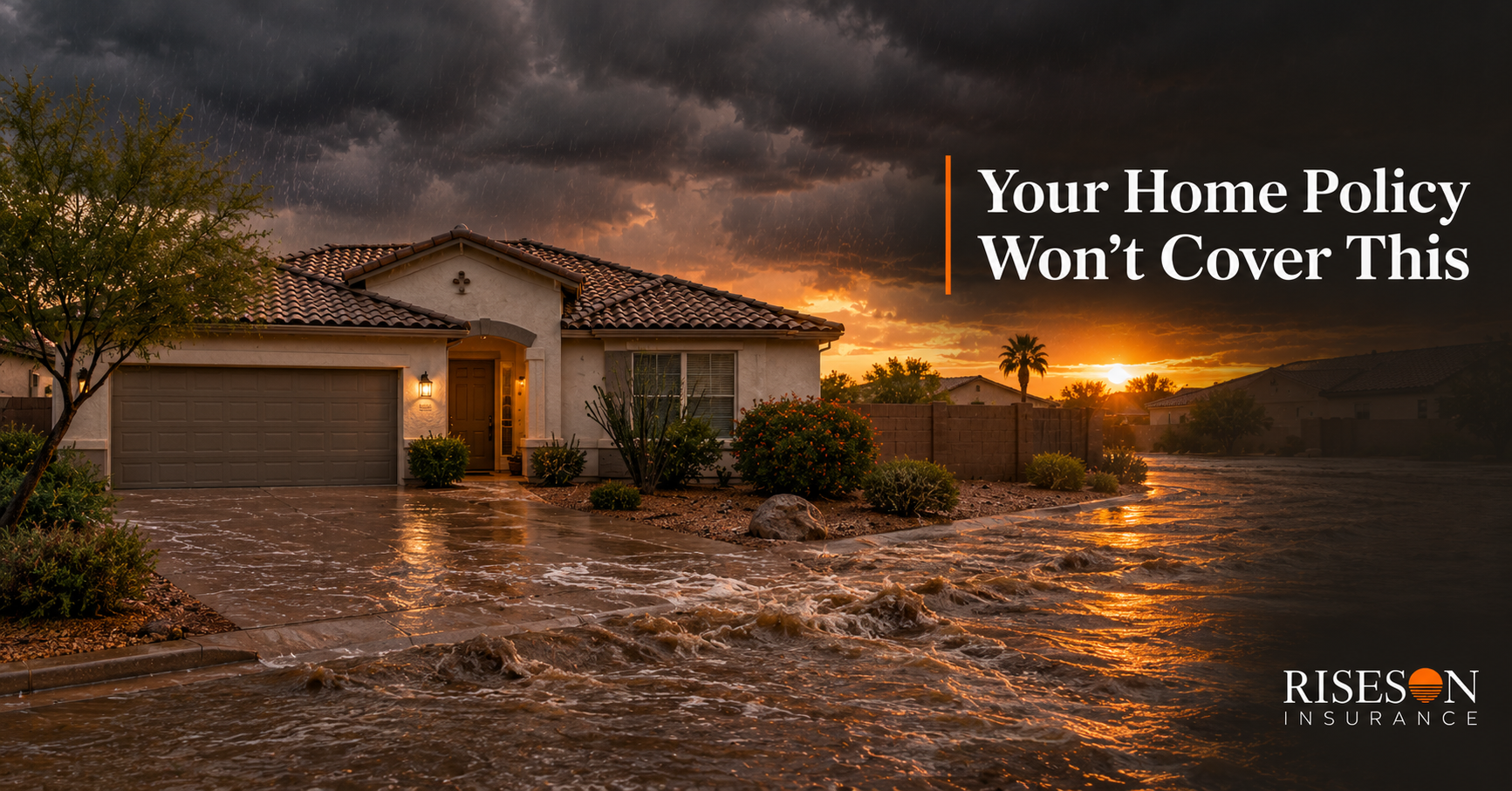
- Flood damage: This is particularly relevant in Arizona. Standard commercial property and BOP policies exclude flood damage from rising water. During monsoon season, flash flooding regularly affects areas well outside mapped flood zones, including many parts of the Phoenix metro. Businesses in low-lying areas or near washes should consider a separate commercial flood policy.
The
Insurance Information Institute and the
National Association of Insurance Commissioners both recommend reviewing exclusions carefully before assuming a single policy covers all your risks.
Who Qualifies for a BOP in Arizona
Not every business is eligible for a BOP. Carriers designed the product for small to mid-sized businesses with relatively straightforward risk profiles. Eligibility thresholds vary by carrier, but the general guidelines are:
- Revenue: Most carriers cap BOP eligibility at annual revenues between $1 million and $10 million, depending on industry.
- Employees: Businesses with fewer than 100 employees are typically eligible. Some carriers set the ceiling lower for higher-risk industries.
- Location: Single-location or small multi-location operations. Large national businesses with complex operations typically require a full commercial package policy (CPP) instead.
- Industry: BOPs are widely available for retail shops, restaurants, offices, service businesses, and contractors. High-hazard industries, such as manufacturing, construction, and hospitality with liquor service, may face more limited options or require endorsements.
Businesses That Are a Strong Fit for a BOP
The BOP is purpose-built for businesses that have both a liability exposure and physical assets to protect. That describes most businesses with a storefront, office, or commercial space. Strong candidates include:
- Retail shops and boutiques in Scottsdale, Chandler, Tempe, and across the Phoenix metro
- Restaurants, cafes, and food service operations
- Professional offices (accountants, real estate agents, financial advisors)
- Salons and personal care businesses
- Contractors with a physical shop or storage location
- Medical and dental offices (though professional liability is a separate add-on)
If your business operates entirely from home with no customer-facing location and minimal physical assets, a standalone general liability policy may be sufficient. But the moment you sign a commercial lease, that calculation changes.
BOP vs. General Liability Only: When the Upgrade Makes Sense
General liability alone covers what you do to others. A BOP also covers what happens to your business. Here is how the two options compare across the decisions that matter most:
General liability only makes sense when:
- Your business has no physical location (fully remote or home-based)
- You carry no significant business equipment, inventory, or tenant improvements
- A client or contract requires a certificate of insurance and nothing more
- Your annual revenue is low enough that property losses would be manageable out of pocket
A BOP makes more sense when:
- You lease or own commercial space
- You have inventory, equipment, or business property worth protecting
- A temporary closure would threaten your ability to pay rent and staff
- You want one policy, one renewal date, and one carrier to deal with
The financial case is straightforward. A standalone general liability policy in Arizona runs approximately $31 per month. Add a separate commercial property policy and business interruption, and you're typically looking at $60 or more per month total, depending on your property values and limits. A BOP bundles all three for around $47 per month on average, because carriers price the bundle at a discount.
The real risk of going GL-only when you have a physical location is not the premium difference. It's the uninsured loss. A fire, a break-in, or a pipe burst that destroys your inventory or equipment leaves you paying out of pocket for everything your landlord's policy doesn't cover. For most small businesses, that's the entire contents of the space.
See how
commercial property insurance works in more detail if you're evaluating your property exposure separately.
Arizona-Specific Add-Ons Worth Considering
A standard BOP can be customized with endorsements that address risks specific to Arizona businesses and your industry. The most commonly added coverages include:
- Equipment breakdown: Covers mechanical or electrical failure of business equipment, including HVAC systems, refrigeration units, and production machinery. In Arizona's extreme heat, HVAC failure is not a hypothetical. It's a real operational risk for any business that depends on climate control or refrigeration.
- Cyber liability: Covers costs related to data breaches, ransomware attacks, and customer notification requirements. Even small businesses that process credit cards or store customer data carry meaningful cyber exposure.
- Employment practices liability (EPLI): Covers claims from employees alleging wrongful termination, discrimination, or harassment. Particularly relevant for businesses with a growing staff.
- Commercial flood: As noted above, standard BOP policies exclude flood damage from rising water. Arizona's monsoon season creates flash flooding risk across the Phoenix metro, often in areas not designated as flood zones. A separate commercial flood policy through the
National Flood Insurance Program (NFIP) or a private carrier closes this gap.
- Liquor liability: Required separately if your business sells or serves alcohol. Not included in a standard BOP.
The right combination depends on your industry, your lease terms, and your specific risk profile. An independent broker can identify which endorsements are worth the premium and which ones you can skip.
How an Independent Broker Compares BOP Options
BOP pricing and eligibility vary significantly across carriers. The same business can receive quotes that differ by 30% or more depending on which carrier underwrites the risk and how they classify your industry.
A captive agent represents one carrier and can only offer that carrier's BOP. An independent broker has access to multiple carriers and can run the same business profile across all of them, then present the options with clear explanations of what each policy covers, where the limits sit, and what the exclusions are.
At Riseson Insurance, we work with more than 20 carrier partners across Arizona. When we shop a BOP for a client, we're comparing not just price, but coverage terms, claims reputation, and how well the policy actually fits the business. A lower premium that leaves a meaningful gap is not a better deal.
If you're opening a new location, renewing an existing policy, or evaluating your coverage for the first time, a 20-minute conversation is usually enough to know whether a BOP is the right fit and which carrier offers the best terms for your specific business.
Frequently Asked Questions
Is a BOP required by law in Arizona?
No. Arizona does not legally require businesses to carry a BOP or general liability insurance. Workers' compensation is the only coverage required by state law for any business with at least one employee. That said, most commercial landlords and many clients require proof of general liability coverage before signing a lease or contract, which is included in a BOP.
What is the difference between a BOP and a commercial package policy (CPP)?
A BOP is a standardized, pre-packaged policy designed for small to mid-sized businesses. A commercial package policy (CPP) is more flexible and allows businesses to mix and match coverage types and limits. CPPs are typically used by larger businesses or those with more complex operations that exceed BOP eligibility thresholds.
Can I add professional liability to a BOP?
Professional liability (errors and omissions) is not included in a standard BOP, but some carriers offer it as an endorsement. Others require a separate standalone policy. If your business provides professional advice or services, this is a coverage gap worth addressing.
Does a BOP cover my business vehicle?
No. Commercial auto insurance is always a separate policy. A BOP covers your business property and liability, but it does not extend to vehicles your business owns or uses for operations.
How much does a BOP cost in Arizona?
The median monthly cost for a BOP in Arizona is approximately $47, though the actual premium depends on your industry, location, revenue, property values, and claims history. Businesses in higher-risk industries or with significant property to insure will pay more. An independent broker can provide quotes from multiple carriers so you can compare actual numbers for your specific situation.
What happens if I only have general liability and my equipment is stolen?
General liability does not cover your own property. If equipment, inventory, or business assets are stolen or damaged, and you only have GL coverage, you pay out of pocket. Commercial property coverage, which is included in a BOP, is what responds to that type of loss.
Get a BOP Quote for Your Arizona Business
For most Arizona small businesses with a physical location, a BOP is the right starting point. It covers the three risks that matter most, general liability, commercial property, and business interruption, at a price that's typically lower than buying them separately.
The gaps it doesn't cover are real, but they're knowable. An independent broker can walk you through exactly what your BOP includes, what it excludes, and which endorsements are worth adding for your specific business and location.
Contact
Riseson Insurance at
602-460-5470 to get a BOP quote across multiple carriers. We'll compare coverage terms, not just premiums, so you know what you're actually buying before you sign anything.