Fire is the risk most Arizona homeowners assume their policy handles automatically. It usually does, but the details of how much it pays, and for what, are where families get caught short after a bad night.
Riseson Insurance is an independent Arizona broker based in Tempe. We read fire coverage on home policies every week, and the gaps we find are almost always in the same three places. Here is what the fire peril covers, where it stops, and how to check your own policy before you need it.
Why fire is a year-round risk for Arizona homeowners
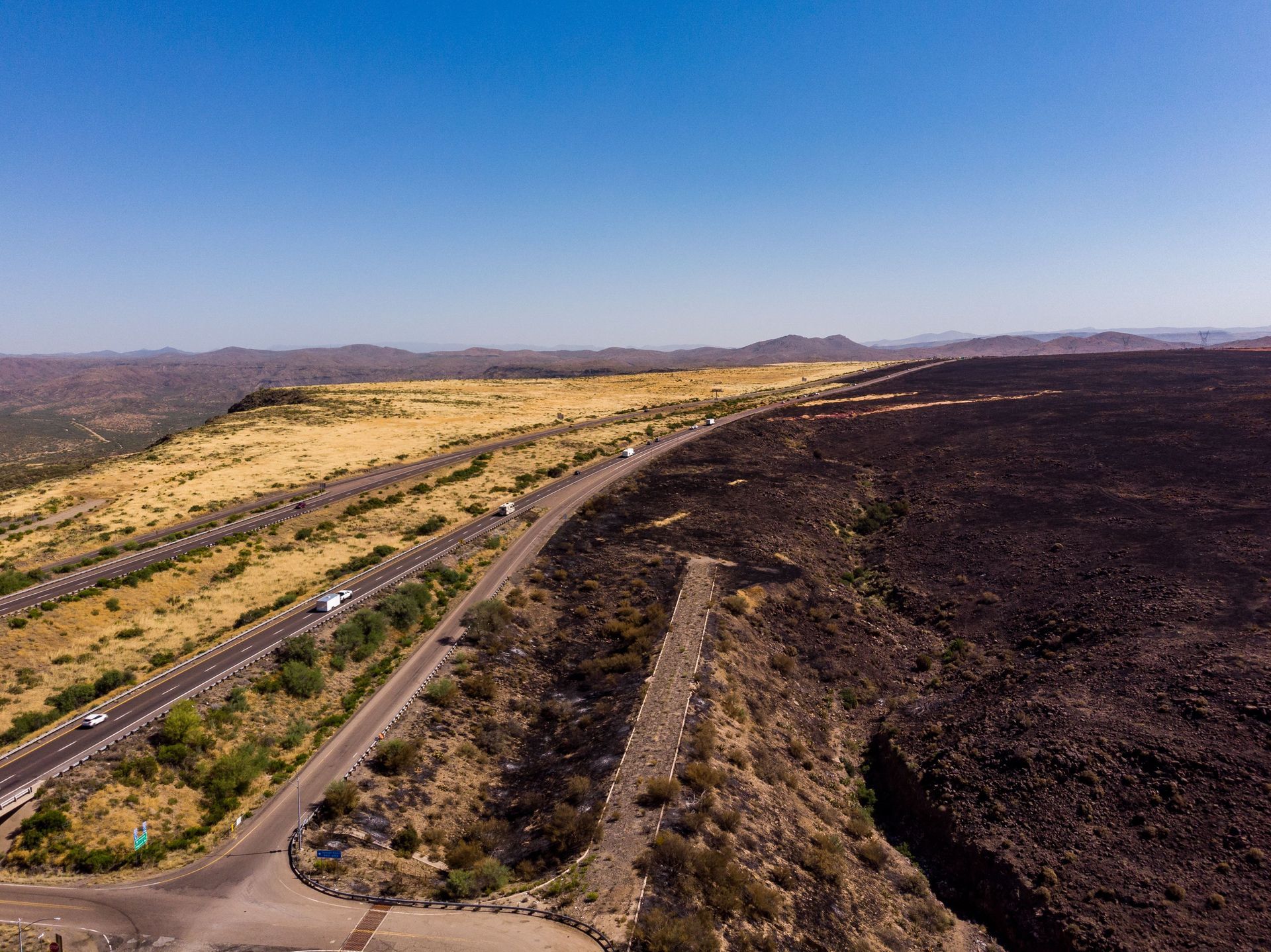
Arizona does not have a fire season that neatly starts and stops. State fire officials describe it as year-round, and 2026 has already produced 1,386 fires that burned 60,724 acres statewide, according to Arizona Department of Forestry and Fire Management figures
reported by KJZZ on August 19, 2026.
That is a mild year by Arizona standards. In 2025 the state lost 306,445 acres, most of it to the Dragon Bravo Fire on the North Rim of the Grand Canyon. A quiet season is not a safe season, and it is not the reason to skip a coverage review.
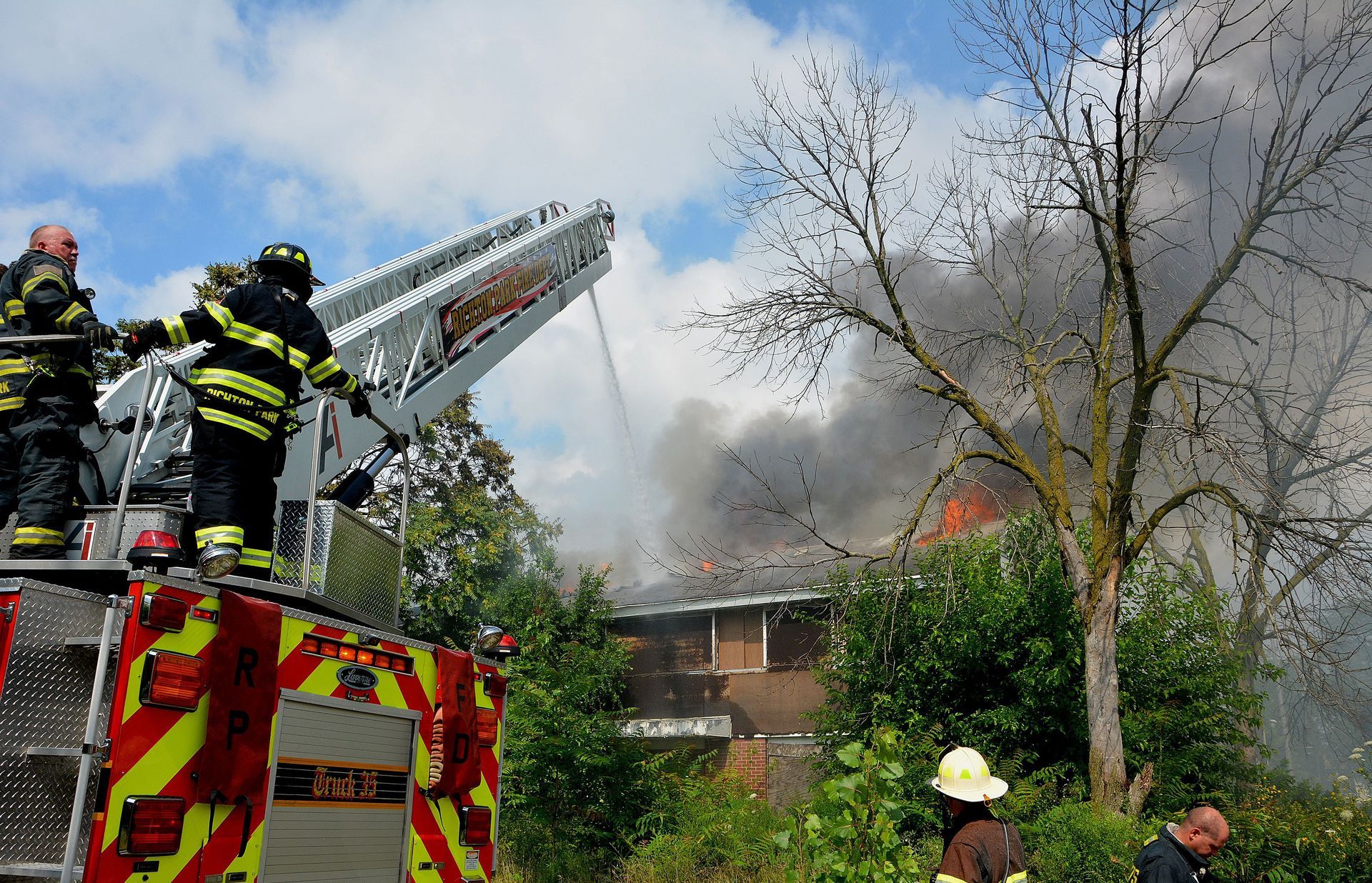
Most Arizona fire claims never involve a wildfire at all. Kitchen fires, electrical faults in older Valley homes, dryer vents packed with lint, garage water heaters, and roadside sparks from a dragging trailer chain all start structure fires. Your home policy treats them the same way it treats a brush fire that reaches your fence line.
What the fire peril actually covers on an Arizona home policy
A standard HO-3 homeowners policy lists fire as a covered peril across four separate coverage parts, and each one has its own limit.
Coverage A, dwelling. This rebuilds the house itself: structure, built-in cabinetry, attached garage, and permanently installed systems. This is the number that has to be right, because everything else is usually calculated as a percentage of it.
Coverage B, other structures. Detached casitas, workshops, sheds, and freestanding carports, typically at 10 percent of Coverage A. A detached guest house in the East Valley can easily exceed that.
Coverage C, personal property. Furniture, clothing, electronics, and tools, usually 50 to 70 percent of Coverage A. Smoke damage to contents is covered here even when the flames never reach the room.
Coverage D, loss of use. Hotel or rental costs while your home is uninhabitable, often 20 percent of Coverage A. Rebuild timelines in Maricopa County routinely run past a year, so this limit matters more than people expect.
Where fire coverage falls short and Arizona homeowners get surprised
Fire and lightning are consistently among the costliest categories of home claims. Triple-I data shows fire and lightning accounted for 21.9 percent of all homeowners insurance loss dollars in 2022, second only to wind and hail, per the
Insurance Information Institute.
The first gap is a dwelling limit set years ago. Arizona rebuild costs have moved, and a policy written at an old replacement cost can leave a real shortfall. Our guide to
replacement cost coverage walks through how that number should be set.
The second gap is ordinance or law coverage. If your home was built before current Arizona building code, a total fire loss means rebuilding to today's standards, and the extra cost is not automatically covered. It is a separate endorsement, and it is inexpensive.
The third gap is loss of use. Twenty percent of Coverage A sounds generous until you price a furnished rental in Tempe or Chandler for fourteen months while permits and contractors work through your rebuild.
What fire protection costs Arizona homeowners
Fire coverage is not sold separately. It is baked into the home policy, so the real question is what a properly built Arizona policy costs. Insure.com puts the Arizona average at about $2,318 a year for a policy carrying $300,000 in dwelling coverage.
Your own number moves with the dwelling limit, your deductible, the age of your roof and wiring, and how the carrier scores your location. Two homes on the same Gilbert street can price differently if one has a 22-year-old roof and the other was reroofed last spring.
Arizona law does not require homeowners insurance. The Arizona Department of Insurance and Financial Institutions regulates the carriers writing here, and you can review company information at
difi.az.gov, but the requirement almost always comes from your mortgage lender rather than the state.
How Arizona carriers judge fire risk on your home
Carriers price fire risk on things you can partly control. Distance to the nearest fire station and hydrant sets your protection class. Roof material and age matter, since a tile or metal roof handles embers better than aging composition shingle. Brush and vegetation within thirty feet of the structure raise the score, especially along the wildland interface in North Scottsdale, Cave Creek, Prescott, and Flagstaff.
Some carriers now pull third-party wildfire scores for a specific address and decline or surcharge before an agent ever sees the file. We covered how that scoring works in our post on
wildfire risk for Arizona homeowners. As an independent broker, we can shop the same address to carriers that read those scores differently, which is often the difference between a decline and a competitive quote.
Steps that lower both your fire risk and your premium
Clear dead vegetation, dry grass, and stored firewood at least thirty feet from the structure. Keep gutters and roof valleys free of debris that catches embers. Have older aluminum or knob-and-tube wiring inspected, since many Arizona carriers will not write a home with it at all.
Clean the dryer vent, service the water heater, and photograph every room once a year for a contents inventory. If you replace the roof, tell us. That single update can move the premium enough to notice, and it also strengthens how your
dwelling coverage is underwritten.
Frequently asked questions about fire coverage in Arizona
Does Arizona home insurance cover wildfire damage? Yes. Wildfire is covered under the same fire peril as a structure fire on a standard HO-3 policy. The practical issue in Arizona is availability and price in high-risk zones, not whether the peril is listed.
Does homeowners insurance cover smoke damage without flames? Yes. Smoke damage from a covered fire is payable under both dwelling and personal property coverage, including a neighboring fire that never touched your structure.
How much does home insurance cost in Arizona? Insure.com puts the state average near $2,318 a year at $300,000 of dwelling coverage. Your rate depends on the dwelling limit, roof age, deductible, and how your address scores for fire and other risks.
Is homeowners insurance required in Arizona? No Arizona statute requires it. Mortgage lenders require it, and going without it means you carry a total fire loss yourself.
What is ordinance or law coverage and do I need it? It pays the extra cost of rebuilding to current building code after a covered loss. If your Arizona home predates recent code updates, it is one of the least expensive endorsements you can add.
Get your Arizona home insurance quote today
If you have not reviewed your dwelling limit, ordinance or law coverage, and loss of use in the last year, your fire coverage may not match what it would actually cost to rebuild. Riseson Insurance is an independent Arizona broker, which means we work for you rather than for one carrier. We will pull quotes from multiple top-rated companies, show you exactly where your fire coverage stops, and find the bundling angle that saves the most. Reach out for a free Arizona home insurance review and see your options side by side.