Goodyear has gone from a quiet farm town off I-10 to one of the fastest growing cities in the country, and the homeowners moving into all that new construction usually have one question: how do I make sure my house is actually covered if something goes wrong? With a 2026 population of roughly 128,372 and growth of more than 31% since 2020, the West Valley is full of brand new HOA neighborhoods, custom builds out near the Estrella foothills, and resale homes that have not been re-shopped in years.
Riseson Insurance is an independent Arizona broker, which means we are not tied to one carrier. We sit down with Goodyear homeowners, compare quotes across multiple top-rated companies, and find the policy that fits the home, the budget, and the very real local risks that come with living on the western edge of the Valley.
Why Goodyear homeowners need the right policy, not just any policy
Goodyear sits in a corridor that combines several of Arizona's biggest home insurance risk factors at once. According to First Street, roughly 88% of buildings in Goodyear are at risk of wildfire, with very high risk levels in most census tracts. The desert interface around Estrella Mountain Regional Park and the open land south of the city means embers, brush fire, and smoke damage are real concerns, not theoretical ones.
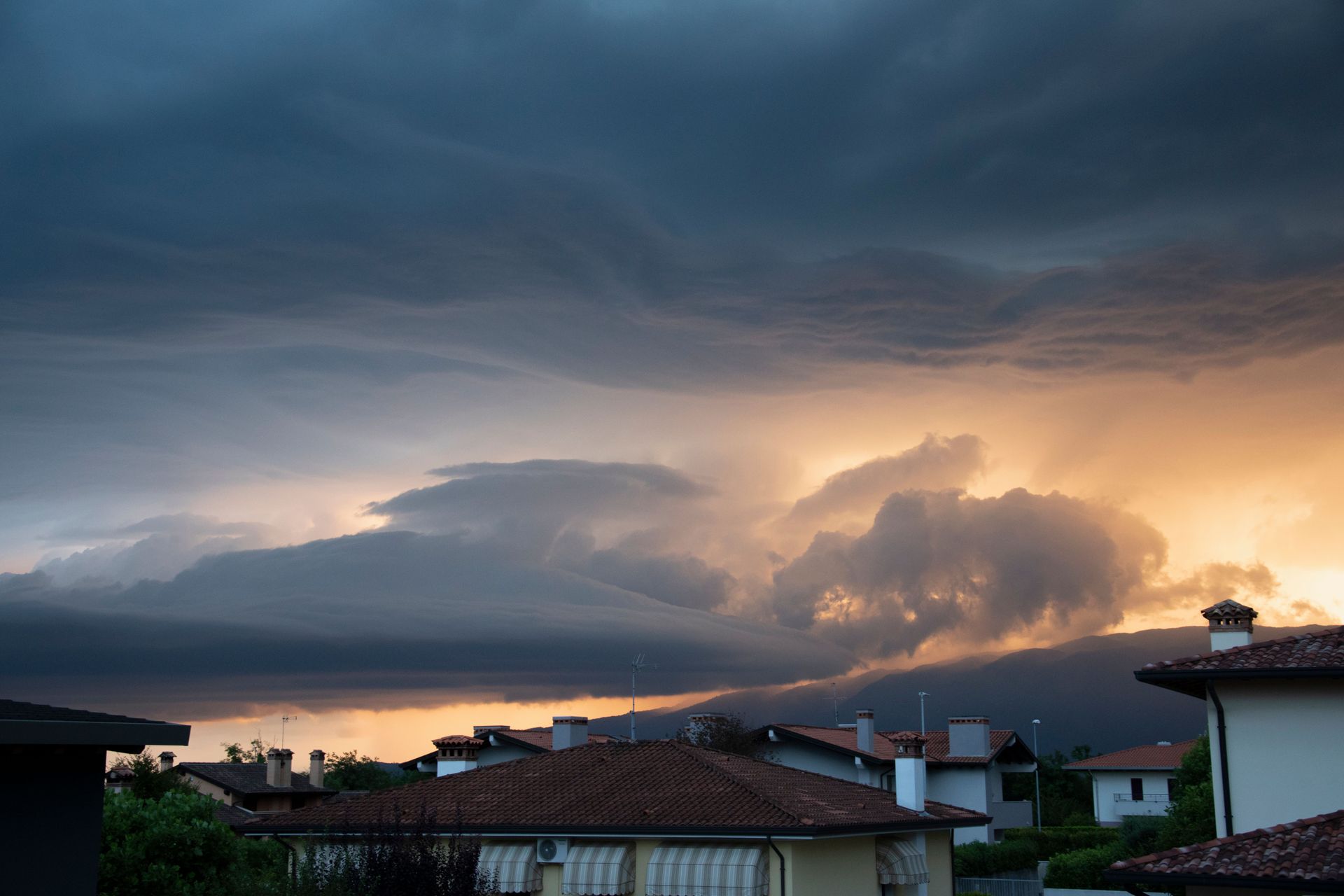
On top of that, the West Valley sits in the heart of monsoon country. The official Arizona monsoon season runs from June 15 through September 30, bringing microbursts, dust storms, lightning, and flash flooding that can drop several inches of rain in under an hour. New stucco homes look bulletproof, but tile roofs lift in 60+ mph winds, AC condensers get hit by hail, and storm drains around Pebble Creek and Palm Valley back up faster than people expect.
What bundling means and how Riseson helps Goodyear homeowners save
Bundling is the single biggest discount most West Valley homeowners are missing. When you place your home and auto with the same carrier, you typically save 10% to 25% on the combined premium, plus you usually get a lower deductible if the same storm damages both your roof and your vehicle. For a family with two cars and a four-bedroom home in Estrella or Canyon Trails, that can be hundreds of dollars a year back in your pocket.
As an independent broker, we shop your bundle across multiple carriers instead of forcing you into one. That matters in Goodyear because the cheapest auto carrier in your zip code is rarely the cheapest home carrier, and the right bundle depends on your specific roof age, build year, and driving record. If you have not had your policy re-shopped in the last 12 months, you are very likely overpaying.
What home insurance actually costs in Goodyear, AZ
Arizona homeowners pay roughly $2,468 a year on average for a standard HO-3 policy with $300,000 dwelling coverage, $100,000 liability, and a $1,000 deductible, according to
Insure.com. Goodyear premiums tend to land near or slightly above that state average because of the wildfire exposure and the higher replacement cost of newer construction homes.
A 2,000 square foot single-family home in Goodyear typically runs in the $1,400 to $2,200 per year range, while larger custom builds out past Estrella Parkway can run $2,500 to $3,800 a year depending on roof material, distance from fire response, and whether the home has a pool or solar. Premium can move a lot based on credit, claims history, and which carrier ends up underwriting the wildfire risk in your specific census tract.
Arizona requirements and local risk context
Arizona does not legally require homeowners insurance, but if you have a mortgage, your lender almost certainly does. The state Department of Insurance and Financial Institutions (difi.az.gov) regulates carriers and handles consumer complaints, and it is worth checking that whoever sells you a policy is properly licensed in Arizona.
Standard HO-3 policies in Goodyear cover fire (including wildfire in most cases), wind, hail, theft, and liability, but they do NOT cover flood. With monsoon flash flooding affecting low-lying neighborhoods near the Gila River bed and engineered washes, a separate NFIP policy through
FloodSmart.gov or a private flood carrier is something every West Valley homeowner should at least price. Earthquake coverage is also excluded by default and is worth asking about if you are anywhere near the Hassayampa fault zone.
Beyond the basics: complete protection for Goodyear homes
Two endorsements come up in almost every Goodyear policy review we do. The first is extended or guaranteed replacement cost on the dwelling, which protects you if rebuild costs spike after a regional wildfire event (Arizona construction costs jumped meaningfully in 2023 to 2025, and many older policies have not kept up). The second is water backup coverage, which handles monsoon-related drain backups that a standard policy excludes.
If you have detached structures (casitas, RV garages, large workshops common in Estrella and the rural pockets near Cotton Lane), make sure your Coverage B limit reflects what it would actually cost to rebuild them. And if you run any kind of side business or short-term rental from your home, talk to a broker about whether your current policy still applies. It often does not.
Frequently asked questions
How much does home insurance cost in Goodyear, AZ?
Most Goodyear homeowners pay between $1,400 and $2,500 a year for a standard policy on a 1,800 to 2,400 square foot home. Larger custom homes near Estrella or homes with pools, casitas, or RV garages can run $2,500 to $3,800. Your final premium depends on dwelling replacement cost, roof age, wildfire risk score, credit, and claim history.
Is home insurance required in Arizona?
Arizona does not legally require homeowners insurance, but any mortgage lender will require it as a condition of the loan. Even if your home is paid off, going without coverage means a single wildfire, monsoon wind event, or liability claim could financially wipe out the equity you have built.
Does home insurance cover monsoon damage in Goodyear?
Wind, hail, and lightning damage from monsoon storms are generally covered under a standard HO-3 policy. Flooding from heavy monsoon rain is NOT covered and requires a separate flood policy, which most Goodyear neighborhoods can buy affordably because they sit outside the highest-risk FEMA zones.
How much can I save by bundling home and auto in Goodyear?
Bundling typically saves 10% to 25% on the combined home and auto premium. For a typical Goodyear family, that often works out to $300 to $700 a year. As an independent broker, Riseson shops the bundle across multiple carriers to find the combination that saves you the most, not the one that pays the agent the most.
Will wildfire risk make my Goodyear home insurance more expensive?
It can, especially for homes near the Estrella foothills or other open desert interfaces. Some carriers have tightened underwriting in high wildfire risk zip codes statewide, and a small number have non-renewed policies in the highest-risk areas. An independent broker can shop carriers that are still actively writing in your specific area and find one that prices your risk fairly.
Get your Goodyear home insurance quote today
If you live in Goodyear and have not compared home insurance quotes in the last year, you are likely overpaying, underinsured, or both. Riseson Insurance is an independent Arizona broker, which means we work for you, not for one carrier. We will pull quotes from multiple top-rated companies, walk you through what is actually covered, and find the bundling angle that saves the most on your West Valley home and auto policies together. Reach out for a free Goodyear home insurance quote and see your options in one place. You can also read our companion guides on
home insurance in Peoria and
home insurance in Surprise for more West Valley context.