If you drive in Arizona, collision coverage is the part of your policy that pays to fix or replace your own car after a crash. It applies whether you hit another vehicle, a pole, a wall or a guardrail, and it applies no matter who was at fault. Here is what collision coverage in Arizona actually covers, what it costs, and when it makes sense to keep it.
At Riseson Insurance, we are an independent Arizona broker, so we compare collision options across several carriers instead of selling you one company's version.
What collision coverage in Arizona covers
Collision pays for damage to your own vehicle from an accident, up to the car's actual cash value minus your deductible. That includes hitting another car, striking a fixed object, or rolling the vehicle. It does not pay for the other driver's injuries or property. Those fall under liability coverage, which is a separate part of your policy.
Collision is also different from comprehensive. Comprehensive handles non-crash events such as theft, vandalism, weather damage, falling objects and animal strikes, according to
Kiplinger. Together the two make up what most people call full coverage.
Why Arizona drivers need to think about collision
Arizona is an at-fault state, and the minimum liability limits are 25/50/15. Those limits protect other people, not your own car. If you cause a crash, or if the other driver has no insurance, nothing in a liability-only policy fixes your vehicle.
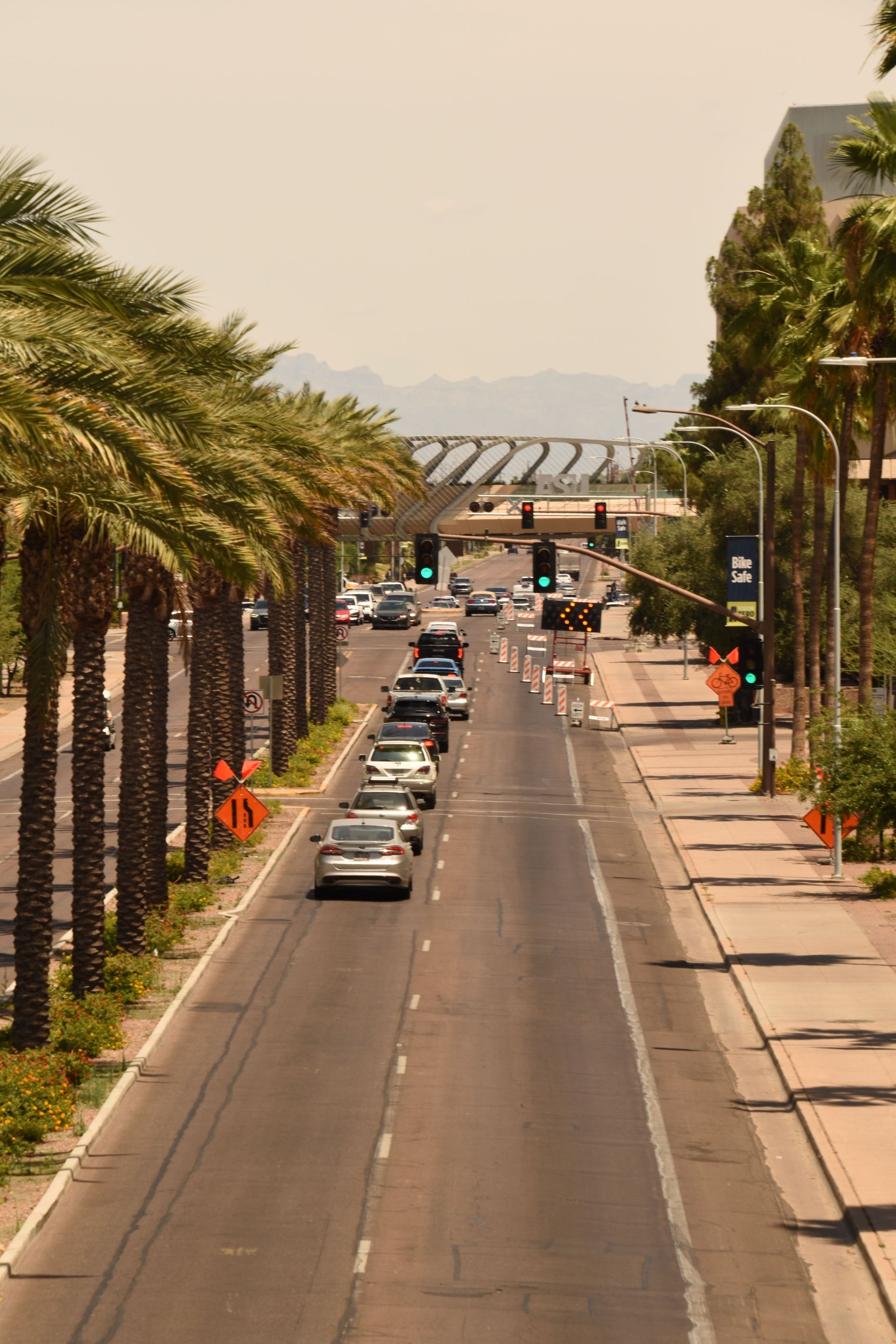
Valley driving adds real exposure. Long I-10, US-60 and Loop 101 commutes, stop-and-go traffic on Mill Avenue in Tempe, and crowded parking lots all raise the odds of a fender bender. Collision coverage turns an unexpected repair bill into a deductible you chose in advance.
How much collision coverage costs in Arizona
Collision averages about $814 per year nationally, according to
Kiplinger, citing Forbes. For Arizona,
Insurify reports full coverage averaging about $162 a month and minimum coverage about $91 a month as of September 2026. Your own price depends on your car, driving record, ZIP code and deductible.
Your deductible is the biggest lever you control. A higher deductible lowers the premium, but you need to be able to pay it comfortably on the day of a claim.
Choosing a collision deductible that fits your budget
Many drivers choose between a $500 and a $1,000 deductible. A simple test works well: if a $1,000 repair bill would strain your budget, keep the deductible lower. If you have an emergency fund, a higher deductible can reduce your yearly cost.
Ask for quotes at two or three deductible levels side by side. The premium difference often shows you quickly which option is worth it.
When your lender requires collision coverage
If you finance or lease your vehicle, your lender will require full coverage, which includes collision and comprehensive, as
Kiplinger notes. Dropping it can put your loan in default, so check your loan agreement before changing anything.
If you own the car outright, the choice is yours. Coverage never pays more than the car's actual cash value, so on an older vehicle the premium can approach what you would receive after a total loss. That is the point where many owners reconsider.
Collision, bundling and the rest of your protection
Collision works best alongside uninsured motorist, bodily injury and comprehensive coverage. If you also own or rent a home, bundling auto with home or renters insurance often lowers the total price. As an independent broker, we check bundle pricing across multiple carriers so you see the full picture.
Frequently asked questions
Is collision coverage required in Arizona? No. Arizona only requires liability coverage at 25/50/15 limits. Collision becomes mandatory only if a lender or lessor requires it for a financed or leased vehicle.
Does collision coverage pay if the accident is my fault? Yes. Collision pays for damage to your own car regardless of fault, minus your deductible, up to the vehicle's actual cash value.
How much does collision coverage cost in Arizona? Nationally it averages about $814 per year according to Kiplinger. Arizona full coverage averages about $162 a month per Insurify, and your price depends on your car, record, ZIP code and deductible.
When should I drop collision coverage? Consider dropping it only if you own the car outright and could afford to repair or replace it yourself. If the premium is close to the car's value, the coverage may no longer be worth the cost.
Get your collision coverage quote today
If you drive in Arizona and have not compared collision quotes in the last year, you are likely overpaying or underinsured. Riseson Insurance is an independent Arizona broker, which means we work for you, not for one carrier. We will pull quotes from multiple top-rated companies, walk you through what is actually covered, and find the bundling angle that saves the most. Reach out for a free Arizona collision coverage quote and see your options in one place.